Invisalign


Teens vs Adults: What are the Challenges and Benefits of Braces?

August 31st, 2026
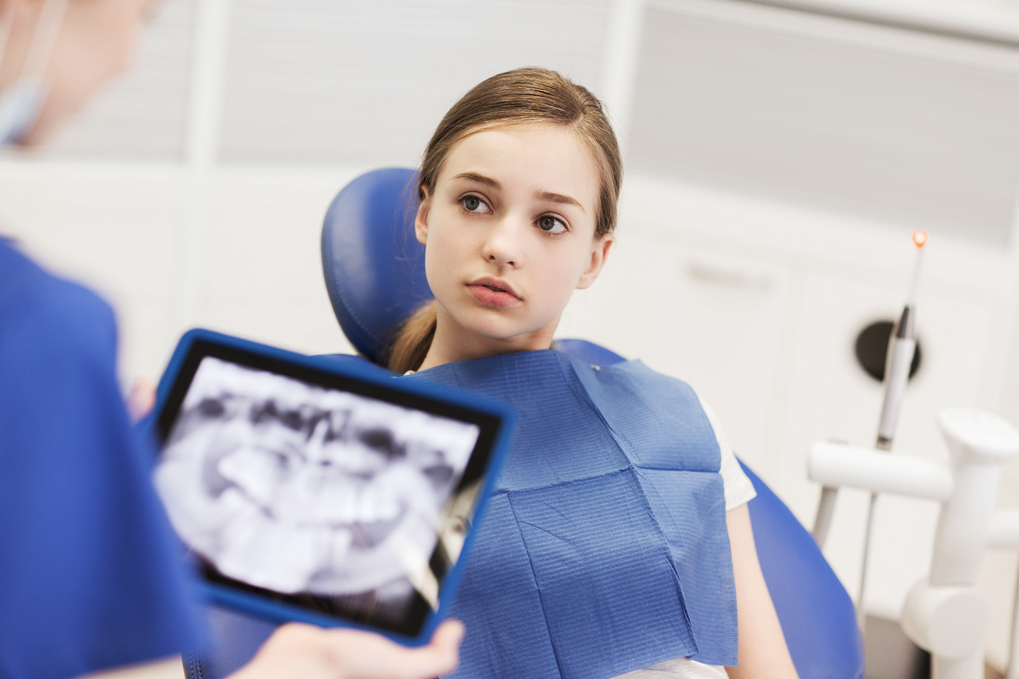
Every age group experiences unique challenges and benefits when it comes to braces.

No doubt, braces improve tooth alignment and bite health for both teens and adults, but each age group experiences unique advantages and difficulties. Here’s an overview.

Benefits for Teens. The main concern for teens is to establish lifelong health benefits from the very beginning. Here’s how the experience mostly translates for teens.

  • Faster movement: Growing jawbones help teeth shift into place more quickly.
  • Peer norm: Many classmates and friends wear braces at the same time.
  • Lifelong health: Fixing alignment early prevents severe dental issues in adulthood.

Challenges for Teens. Just being a teen can be an anxiety-ridden time! But with today’s technology, braces are easier to wear and more acceptable among peers than ever before!

  • Self-esteem: Some teens feel shy or insecure about how metal braces look.
  • Food limits: Sticky candy, popcorn, and hard snacks are out of the diet for a while.
  • Hygiene care: Brushing and flossing around brackets requires extra daily effort.
  • Compliance: The more conscientious the teen, the better and faster the results. Forgetting to wear rubber bands or headgear delays the removal date.

Benefits for Adults. Oral health and setting the stage for career success are key reasons for adult braces.

  • Better confidence: A straight smile improves self-image in the workplace and social settings.
  • Oral health: Correcting crowded teeth makes cleaning easier and lowers gum disease risks. And as we get older, our teeth can stay healthier.
  • Discreet choices: Clear aligners and even tooth-colored brackets offer subtle treatment options, creating a more acceptable timeframe for treatment.

Challenges for Adults. As we age, progress may take a little longer. Luckily, most adults have more patience!

  • Slower healing: Adult jawbone is denser, which makes tooth movement slower.
  • Longer treatment: Adults often need to wear braces for more months than teens do.
  • Professional comfort: Wearing visible braces can feel awkward during business meetings or client interactions.

Current Professional Standards. Technology and orthodontic skill development allow for more options in orthodontic treatment – whether you are an adult or teen. Clear aligners provide a virtually invisible, removable option, while traditional metal braces use bonded brackets and wires for continuous, fixed pressure. Both effectively straighten teeth, but they fit different needs and lifestyles.

Clear Aligners, including Invisalign are nearly invisible to the eye. While clear aligners are removable, adhering to the wear time of 22 hours per day may hasten treatment. Consistency of treatment is an important factor for many teens. And since aligners are removable, there are few, if any, food restrictions.

Traditional Metal Braces are more noticeable. They are fixed to the teeth and remain so throughout treatment. In this case the patient should avoid sticky, hard or very chewy foods.

The Americam Association of Orthodontists (AAO), includes a great article on aligner treatment. Check out the technical details. You can also review a detailed breakdown of Braces vs Aligners on their site.

There are also a couple of great references on our site that you might want to read.

  1. FAQs on Invisalign. We answer your questions about Invisalign – from how the system works, to the benefits, to how often people choose Invisalign treatment.
  2. What is it like to live with braces? We answer your questions and put your mind at ease.

Finally remember that we are happy to schedule a consultation with you at no cost! Talking to someone about the best treatment for you often takes the mystery and fear out of the procedure. Please give us a call!
Case Study: Early Intervention Can Prevent “Stuck” Teeth

August 30th, 2026

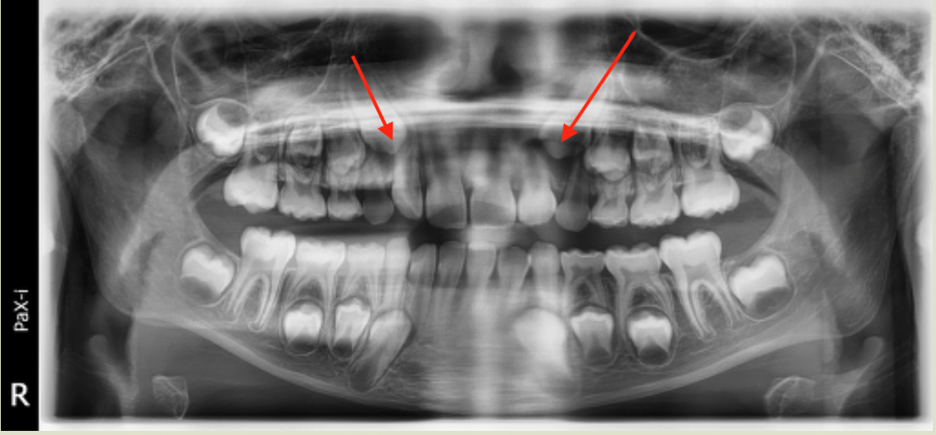
This panaramic radiograph shows all of the teeth and structures in the mouth

Patient. At eight years old, Bellewas referred to Baltimore Orthodontic Group in 2021 for evaluation of developing crowding. Early detection was key to Belle’s successful outcome.

Problem. Upon taking a panoramic radiograph as noted above, we identified that Belle’s upper canines were pointed towards the neighboring teeth in a manner that risks root damage. You can see the “sideways” lean in the red arrows labeled is the photo above. You might say that the upper canines are “parked in the wrong driveway!” Early referral and detection allowed us to intervene in a timely matter to help prevent future impaction and damage.

Impacted canines are one of the most common orthodontic issues we see in young adolescents and one of the primary reasons for early interceptive treatment. What occurs is fairly straightforward. The maxillary canines, which have a long and complex eruption path, encounter difficulties finding their way into the arch because of insufficient space or lack of eruption guidance. When this occurs, early detection prior to 10 years old allows for a maximum number of options and chances for success. The earlier that an orthodontist can identify the problem, the less invasive the treatment. And the earlier the problem is addressed, the better the long-term prognosis for both the tooth and the surrounding structures.

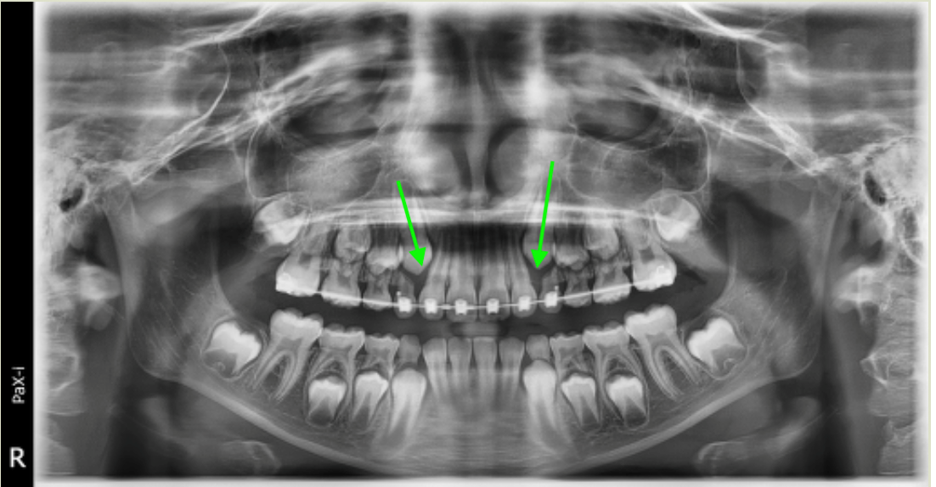
Updated x-ray 9 months after treatment started.

Solution: Phase I. Treatment for Belle’s impacting canines was conservative and involved prophylactic expansion and creation of additional space with partial braces. An updated x-ray (shown above) was taken approximately 9 months after the commencement of Phase 1 early treatment to monitor the eruption path of the canines. It is easy to see the clear progress on the updated X-ray, showing an improved eruption angle with no infringement on the roots of the adjacent lateral incisors!

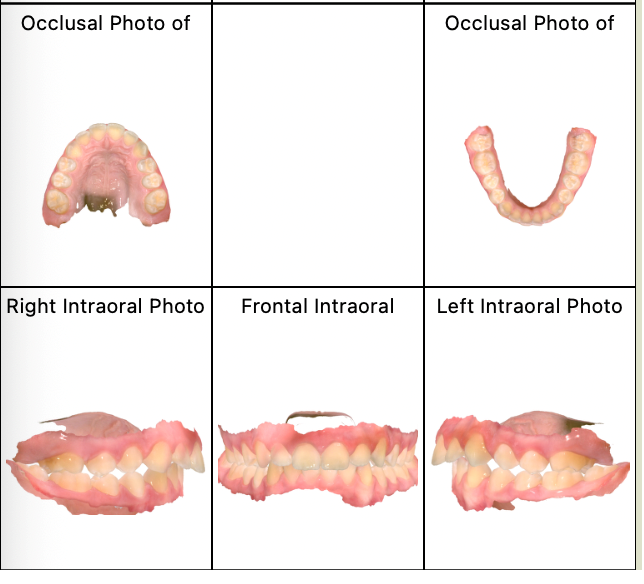
Phase 1 final photo showing a resolution of crowding in both arches.

It is easy to see by the final photos that crowding had improved dramatically. Phase I was a resounding success!

Solution: Moving from Phase I to Phase II. In order to stabilize all the work that had been completed, Belle was then prescribed retainers to wear at night to “save” space for the adult teeth. Following the conclusion of Phase I treatment, we continued to see Belle for evaluation on a periodic 6-month basis. During this time, we kept track as she lost her baby teeth and observed the eruption of her adult teeth. Upon the eruption of all permanent dentition, Belle was ready for Phase II, a comprehensive phase of treatment to align all the remaining teeth and correct the bite to perfection. Belle opted for Invisalign in conjunction with elastics and was a model patient.

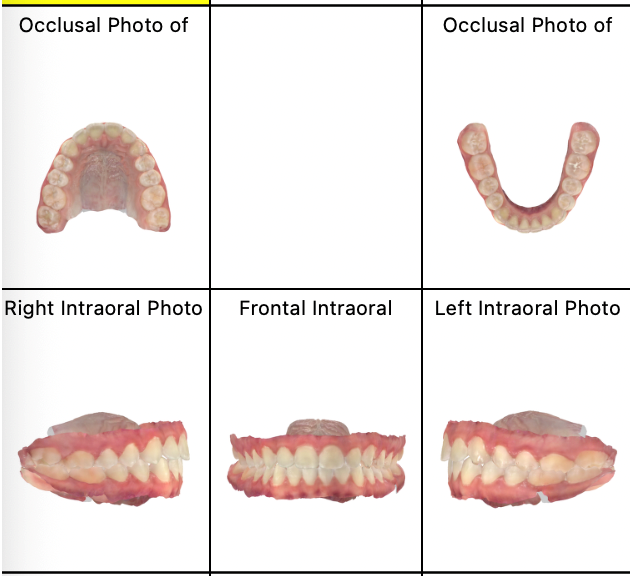
Results: You can see the stellar results of her hard work in the photos below.

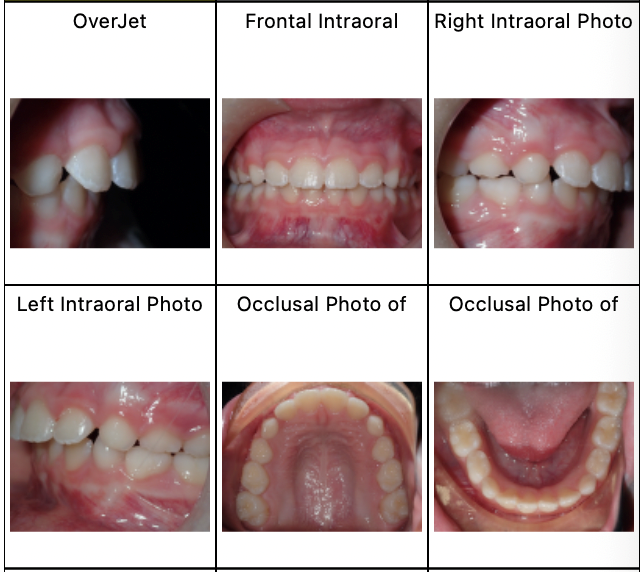
The above photo was taken pre-phase 2.

This final photo was taken following phase 2 treatment.

Let'sGet Started

The first step towards a beautiful and healthy smile is to schedule an appointment with Baltimore Orthodontic Group with a dedicated team that treats patients of all ages. We work with our patients to find a treatment option that best fits the patients’ needs, including: Invisalign, clear braces and metal braces. We have five convenient orthodontic offices in the Baltimore area. You can schedule your appointment by giving us a call at your preferred location, Ellicott City, Catonsville, Eldersburg, Eastpoint or Lutherville. Contact information is listed below. You can also send a request by email to us by clicking here.
We look forward to meeting you in our office!

Request Appointment