Case Study


Case Study: Dental Problems Can Re-emerge In Adulthood

February 17th, 2026
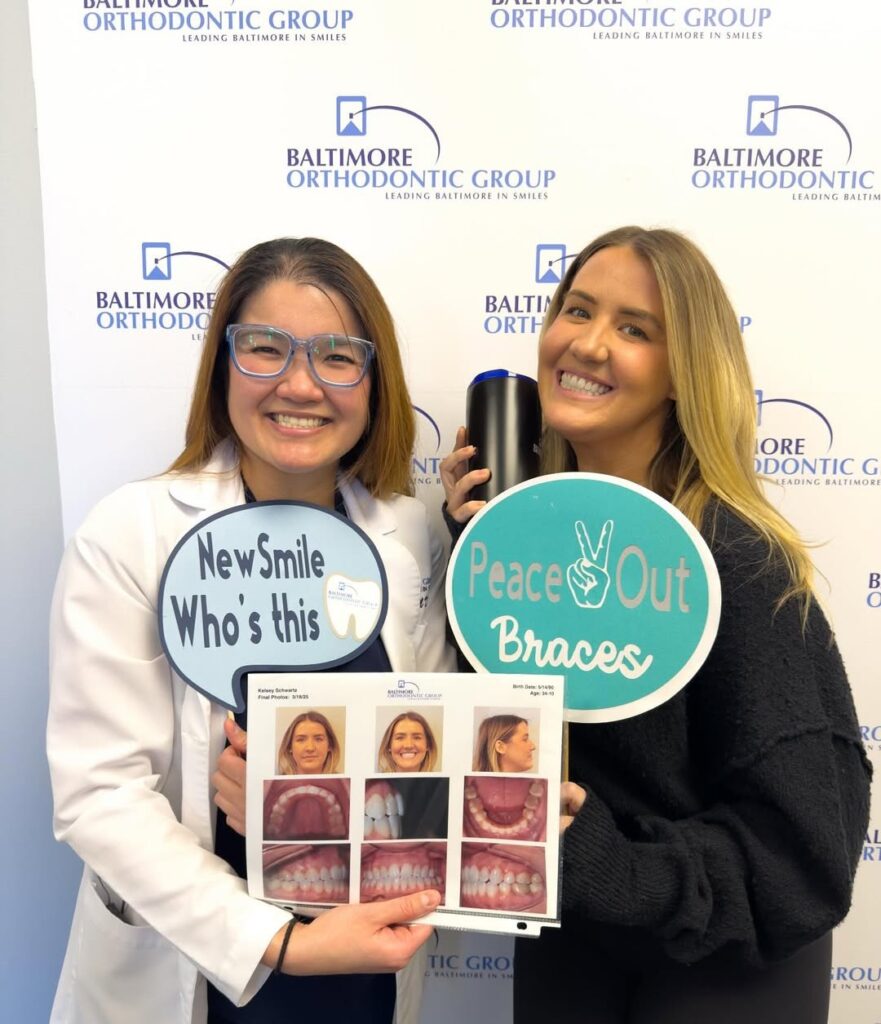
Kelsey and Dr Dao, after treatment completed.

Many people start orthodontic treatment as teenagers. Because of this, there is a misconception that after the teenage years, teeth will stay put. As with other areas of the body, teeth can change as a teenager grows into an adult and dental problems can re-emerge. This case study is an example of changes adults can notice as they mature. Hear more from Kelsey.

Patient. Kelsey came to Baltimore Orthodontic group in 2020 seeking treatment for her anterior open bite. She had previously received orthodontic treatment as a teenager, including premolar extractions and an expander.

Problem. As Kelsey grew to adulthood, the open bite and posterior crossbite re-emerged.  At this stage of adulthood, Kelsey was presented with two distinct options. 1) She could be treated with a course of Invisalign braces. This treatment would improve her teeth position but not perfect the bite. Or, 2) she could undergo full treatment with accompanying orthognathic surgery (corrective jaw surgery) to produce a "textbook perfect" smile. Kelsey chose the latter – with stellar results!
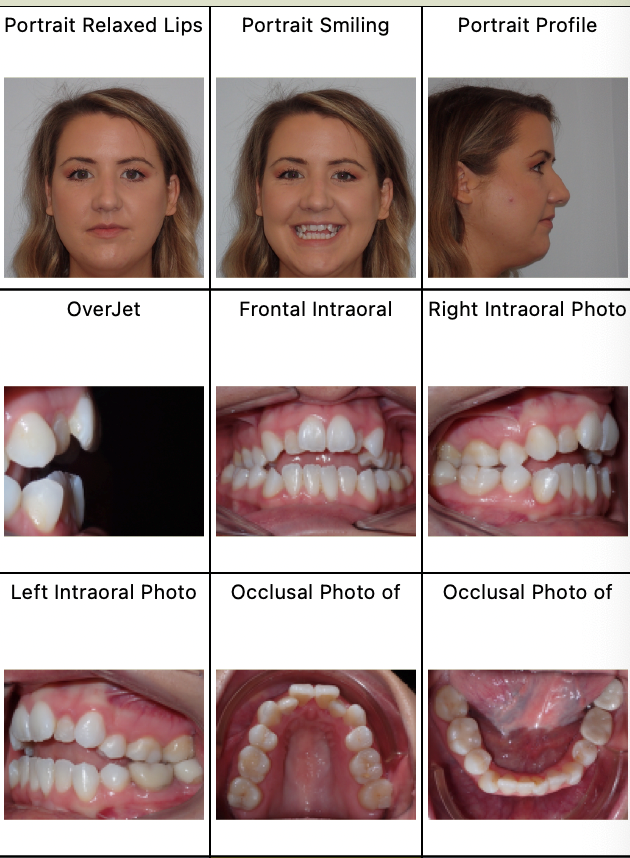
Kelsey’s teeth, demonstrating open bite and posterior crossbite.

Solution. Kelsey presented with generalized crowding, a posterior crossbite, and an anterior open bite that was partially the result of a forward tongue posture. Kelsey was prescribed myofunctional therapy, a form of physical therapy that addresses tongue habits, in order to help close the anterior open bite. The next step was to address tooth movement  with Invisalign. From there she transitioned to braces prior to the surgery to further encourage the movement of a few stubborn teeth.

Process. Orthognathic surgery was planned for several reasons. First, it was important that her upper and lower jaw were in harmony to address the posterior crossbite. Secondly, the surgery was crucial to closing the anterior open bite and providing the maximum stability to retain the position of the teeth.
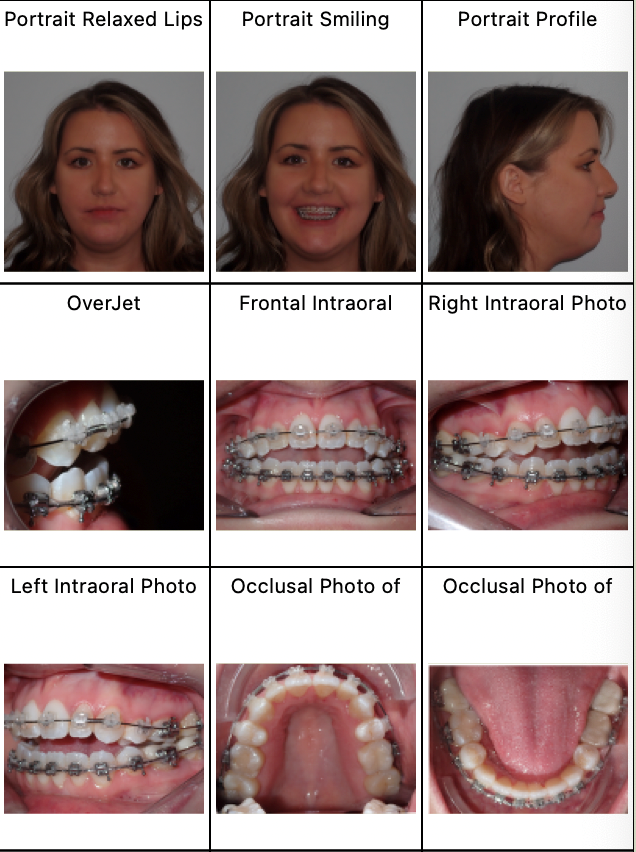
Kelsey prior to orthognathic surgery. Notice how her teeth are straight, but the bite remains incorrect without surgical intervention!

Result. Kelsey's treatment, while a big commitment, yielded similarly giant results! At the completion of orthodontic movement, her general dentist placed new molar crowns on the lower left side to complete an ideal bite. We were able to set up the adult teeth to make it easier to care for her teeth and gums long-term. Kelsey's case is a wonderful example of how multidisciplinary care between different types of dentists – general dentists, orthodontists, periodontists, and oral surgeons – can contribute to ideal dental esthetics and health. We are so happy for her!
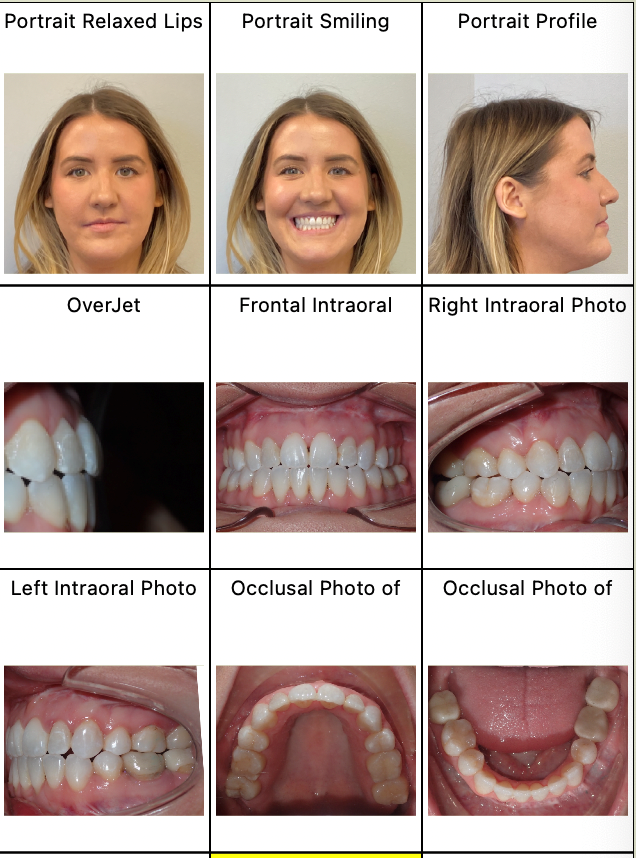
Kelsey, finished treatment and with a beautiful smile!

Case Study: The Path To Healthy Teeth and Gums

August 19th, 2025

Travis, after completing his second stage of orthodontic treatment.

Patient. Travis is a previous patient of Baltimore Orthodontic Group. At an earlier age, he had undergone Phase I treatment, helping to ensure that all of his permanent teeth had room to erupt. Now, at 14 years old, Travis was excited to begin the second stage of orthodontic treatment! 

Problem. Because of his genetically thin tissues, Travis had a history of gum recession. The recession was severe enough on the lower front teeth to necessitate gum grafting. Gum grafting is a periodontal procedure where donor gingival tissue is taken from a host site and adapted to a recipient site. The grafting process has multiple functions: 1) It helps to "regrow" the gum tissue; 2) Protect the tooth roots; 3) Decrease sensitivity; and 4) Lower the risk of additional recession.

Process. Now, at this second phase of treatment to correct an overbite and crowding, it was important to carefully monitor Travis's lower gum tissues. Our goal was to make sure the recession did not re-emerge, especially as his teeth began to shift during the course of orthodontic treatment. 

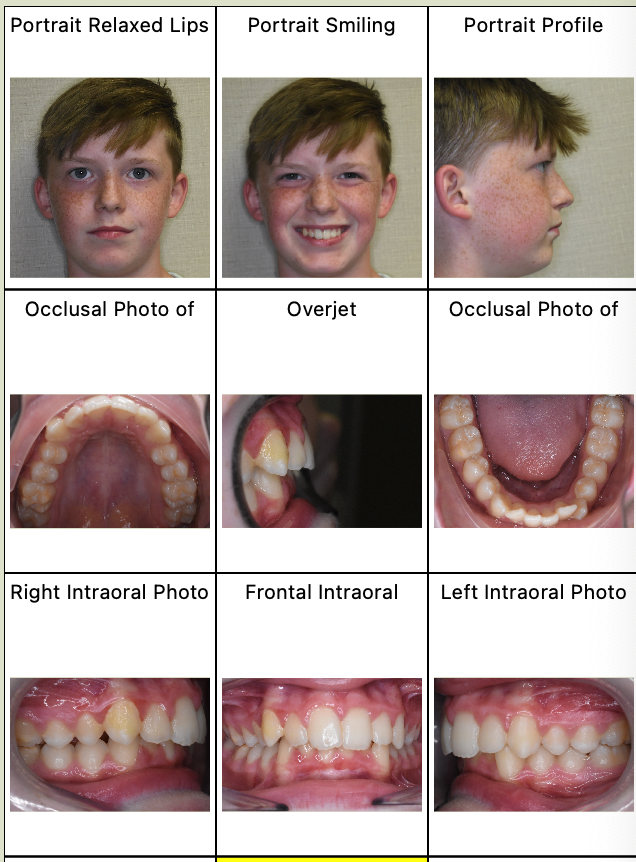
Before treatment photographs, showing crowding and overbite.

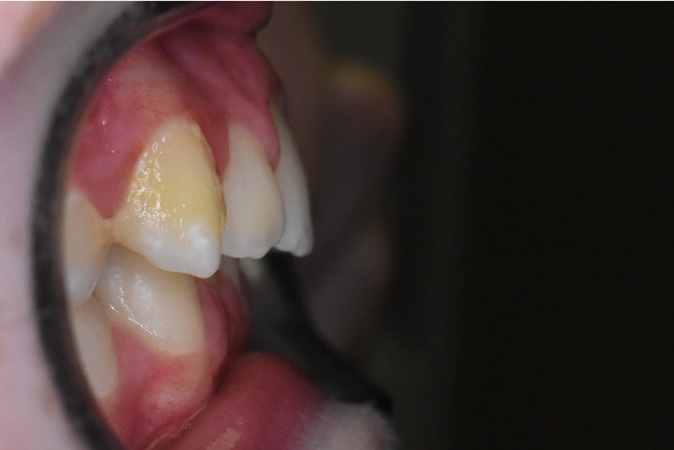
Solution. As noted above,Travis presented with excess overjet, sometimes called an "overbite," and lots of crowding on the lower arch (his bottom left canine was almost completely blocked out from alignment). Both conditions necessitate bringing the bottom teeth forward with the aid of rubber bands to help straighten their appearance and at the same time, reduce the "overbite distance" between the top and bottom teeth. This is illustrated in the lateral photo below.

Photo illustrating Travis’s overbite.

Due to Travis's thin gum tissues and history of gum grafting, extra caution was needed during his dental treatment. As a result, the decision was made to perform interproximal reduction between his lower incisors. Interproximal reduction is a minimally invasive and safe procedure where a thin strip of sandpaper is gently passed between each tooth in a contouring process. This procedure creates additional space – designed to help keep the teeth centered in the soft tissue. It also helps to establish ideal tooth alignment and symmetry.

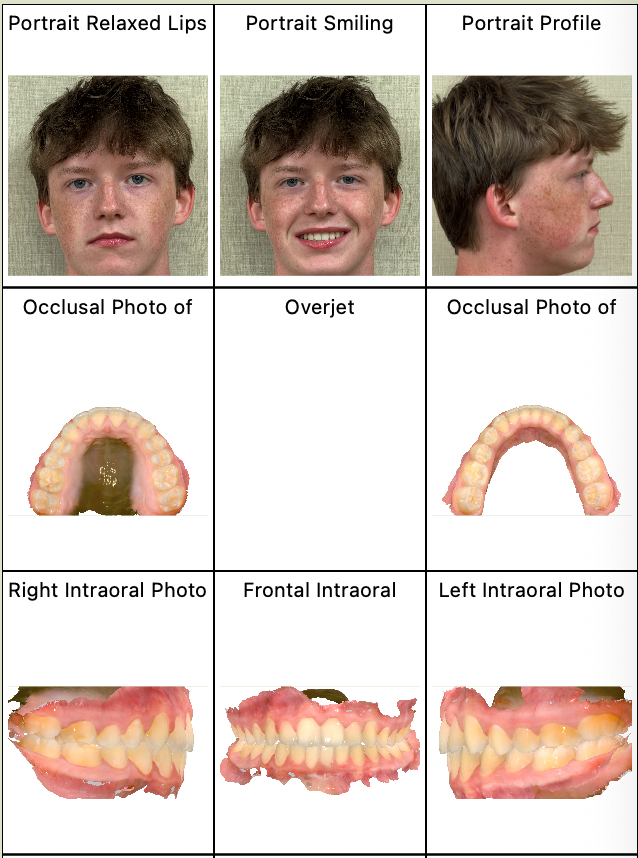
Travis’s after treatment photos.

Results. Travis was a rockstar with his Invisalign trays and rubber bands and finished treatment in less than two years! The result of his treatment was a perfect smile, where his teeth and gums are in optimal condition. His photo at the beginning of this case study shows him smiling from ear-to-ear on the day of his retainer delivery! We are so excited for you Travis and proud of your commitment to a better smile!

Case Study: Appliances Today Are No Longer Medieval!

February 24th, 2025

When it comes to correcting the alignment of teeth, the thought of an expander or some kind of headgear device sometimes conjures up images of medieval torture – or at the very least, a bulky, uncomfortable device. With the right experience and today’s technology, that process is much more reasonable, and comfortable. One of our younger patients illustrates this new technology quite well.

Patient. An 8-year-old came to us via a recommendation from his dentist. He had a complete crossbite – which means that all of his upper teeth were inside his lower teeth.

Problem. Such a complete crossbite can negatively affect the growth of a child’s jaw. For that reason, it’s important to correct crossbites at an early age. When a patient with a crossbite comes to us, it’s important for us to make room in his/her mouth.

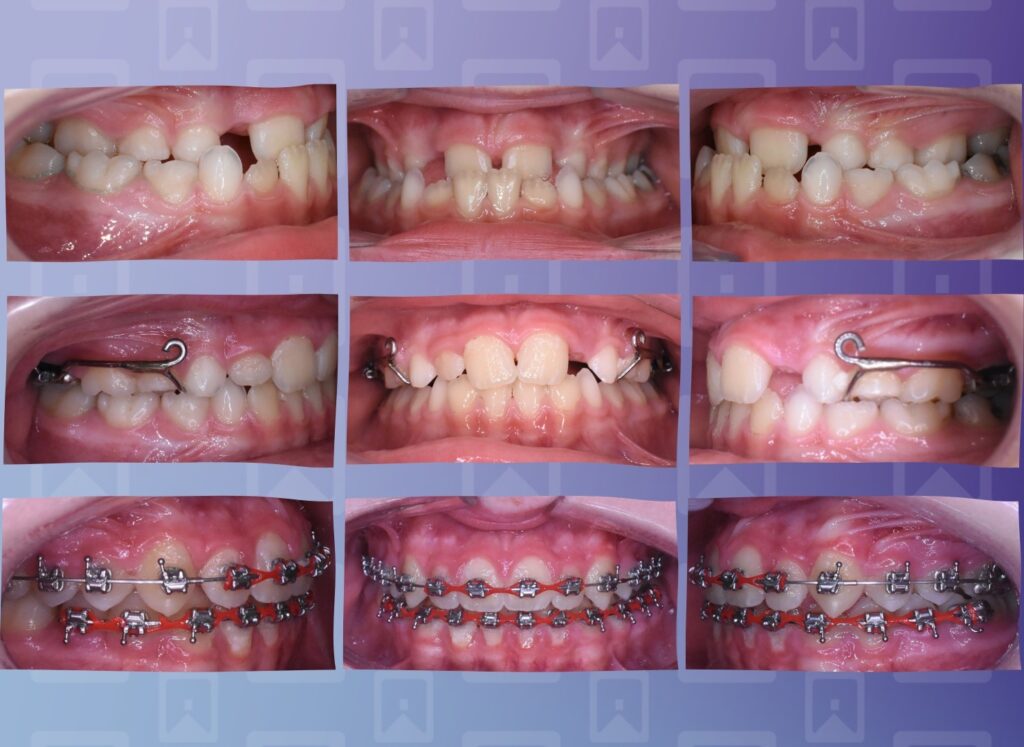
Solution. When the doctors at Baltimore Orthodontic Group first saw this 8-year-old, we recognized that our first course of action was to make ROOM for growth! While you can see by the string of photos below that the need for room was fairly drastic, we were able to start working on this patient using ONE simple appliance to correct his crossbite while bringing his upper teeth forward.

This photo shows the process of straightening the teeth of this 8-year-old. The first line of photos show the complete overbite. The second row includes the device inserted to make room in his mouth. Finally, once all the teeth had grown in, the third row includes the braces used to straighten his teeth.

The Process. With time, the appliance used for this patient allowed space for his adult teeth to come in.Once all of the adult teeth erupted in this patient’s mouth, we then placed him in braces to straighten and align his smile.

Results. Before too long, and without enduring crazy mechanical contraptions, this patent had no more crossbite and we were able to remove his braces. Even better, we caught the problem early – the patient isn't even in high school yet!

Case Study: Surgery Is Sometimes Required To Align Adult Teeth

January 22nd, 2025

Jacob, post treatment, with Dr. Dao, sporting a perfect smile for the holidays!

Timing is often the reason for a visit to the orthodontist. In this case, Jacob was planning for the future, hoping for positive results before his wedding.

Patient. Jacob was referred to Baltimore Orthodontic Group by his general dentist, who had noted a clinical asymmetry in his lower jaw.

Problem. Jacob presented with a posterior crossbite on his right side, and an open bite at the front of his smile. Crowding was noted on both the top and bottom arches, and the upper and lower midlines were not aligned due to the pre-existing asymmetry. Jacob shared with our doctors his goals of achieving ideal symmetry and esthetics, with the hopes of seeing noticeable improvements before his wedding in the spring of 2024. 

Jacob’s photos before treatment.

Solution. Posterior crossbites are best addressed in young children, as they do not self-correct with time and in actuality become harder to treat with age. Once we grow past an "ideal age window", crossbites become more stubborn as our bones begin to mature and sutures begin to fuse. Posterior crossbites in adults often cannot be treated with an expander alone. Instead, surgical intervention is often needed in order to achieve true correction, protect the integrity of the hard and soft tissues, and maximize stability in retention. In Jacob's case, surgery would have the additional benefits of correcting the asymmetry in his lower jaw to perfectly align his bite, while simultaneously ensuring contact on the anterior teeth to facilitate daily speech and mastication. After reviewing the benefits of this approach, Jacob was committed and ready to get started!

Jacob’s photos after treatment. Note his wider smile and change in jawline.

Process. The decision was made to begin Jacob's case with a palatal expander in conjunction with surgery. The palatal expander would create additional transverse room to either side of the jaw to address the malocclusion and assist the surgeon in the procedure to correct the crossbite. The expander was delivered shortly after the new year of 2022, immediately preceding the surgery, and retained for approximately six months. Subsequently, Jacob's teeth were straightened with Invisalign before a second procedure to perfect the symmetry of his arches.

Result. Typically, surgical cases are carried out with traditional braces to assist in stabilization and healing. However, the doctors at Baltimore Orthodontic Group were able to achieve ideal results utilizing Invisalign following Jacob's request. Jacob was even able to take a short break from his Invisalign attachments and trays to get married, before picking up treatment again seamlessly!

Finishing touches were placed with additional aligners before the conclusion of treatment in December of 2024 - just in time for the holiday season! Treatment spanned less than three years and yielded some fantastic results in the occlusion and profile, thanks to Jacob's commitment and dedication throughout the process. At the end of treatment, Jacob was prescribed retainers to wear at night to preserve the positive improvements in his smile. What an amazing difference!

Case Study: A Need For Braces. . .But Anxiety Was High!

July 25th, 2024

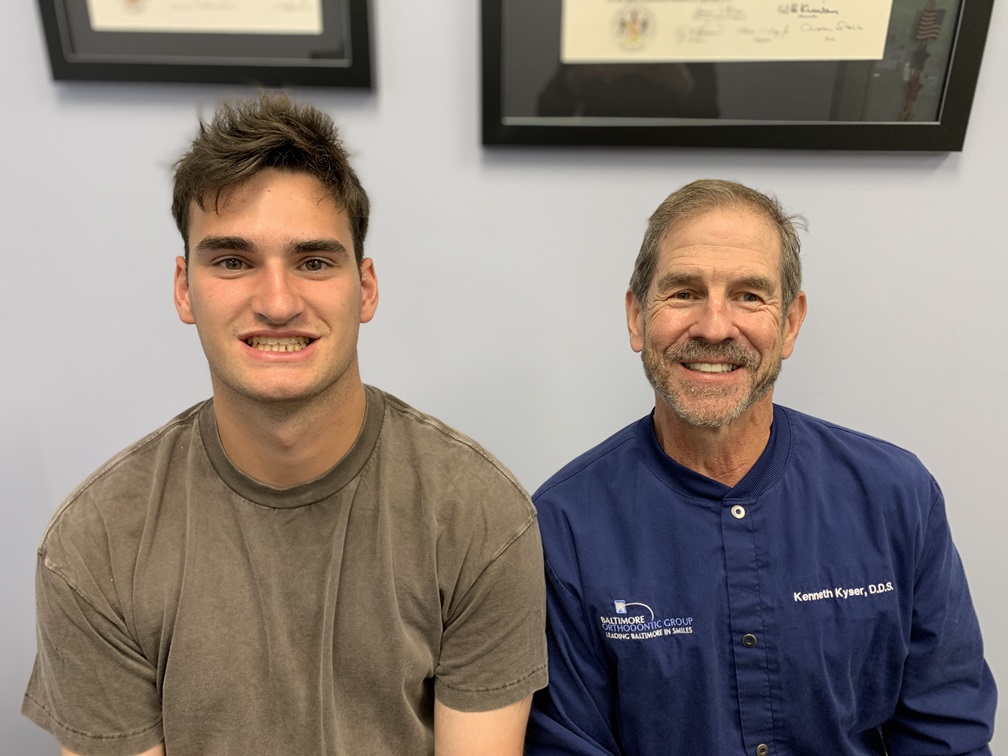
Joseph and Dr. Kyser, post-treatment

A 20-year-old male with complex dental concerns needed braces but was anxious from the start and worried about the outcome. He had been told he would need orthognathic (jaw) surgery.

Patient. Joseph is a young adult male who had impacted canine teeth, a posterior cross bite and an under bite. He knew braces would improve his appearance and his health, but he worried about the process and whether or he’d get the results he wanted without jaw surgery.

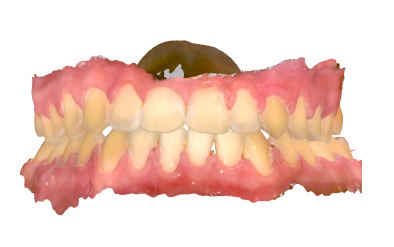
Close-up of teeth prior to treatment

Problem. Joe’s narrow top jaw left his canine teeth impacted. Besides needing braces to align the teeth, Joe needed an arch expander to allow the teeth to come in and to help with proper alignment. Other orthodontists had previously told Joe that he was too old for an expander.

Solution. The doctors at Baltimore Orthodontic Group agreed that the first step of Joe’s treatment should be the expansion of his top jaw. A quad helix expander was used to provide more room for Joe’s teeth to align properly and correct his posterior crossbite. A full upper and lower innovation bracket system was then used to align his teeth and make more room for the impacted canines. Joseph was referred to an oral surgeon to help expose his impacted canine teeth. The doctors at Baltimore Orthodontic Group were then able to tether the teeth to bring them into proper position.

Process. Joseph originally started working with Baltimore Orthodontic Group in December of 2021. His braces were removed in July of 2024. Joseph’s teeth alignment was a more complex case. Knowing this, it was important for Joe to feel comfortable with the group performing orthodontic care and to have the trust in his doctors.

Close-up of teeth after treatment

Result. Joseph’s smile, alignment and appearance improved significantly. Joe considered the end result very successful. According to Joseph,

I was very nervous going into treatment as an adult, especially since my case included the need for an oral surgeon. Throughout my entire treatment, Dr. Kyser and his team were so encouraging. That encouragement helped convince me that I would have the best result. The entire Baltimore Orthodontic Group has been great and I am very happy with how my smile turned out. Really, it was difficult to envision the final outcome while going through treatment, but I am so happy in the end that I decided to trust the process and the people and stick with it all!" 

Let'sGet Started

The first step towards a beautiful and healthy smile is to schedule an appointment with Baltimore Orthodontic Group with a dedicated team that treats patients of all ages. We work with our patients to find a treatment option that best fits the patients’ needs, including: Invisalign, clear braces and metal braces. We have five convenient orthodontic offices in the Baltimore area. You can schedule your appointment by giving us a call at your preferred location, Ellicott City, Catonsville, Eldersburg, Eastpoint or Lutherville. Contact information is listed below. You can also send a request by email to us by clicking here.
We look forward to meeting you in our office!

Request Appointment