Case Studies


Case Study: Crowding and Cleaning Challenges

April 28th, 2026
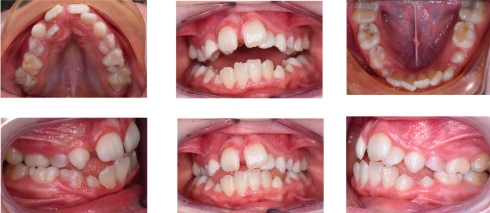
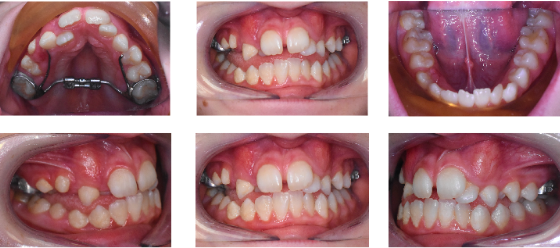
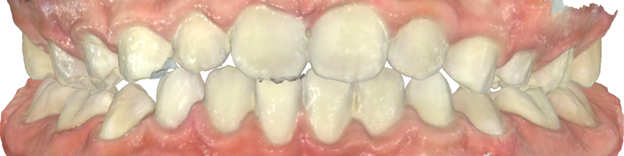
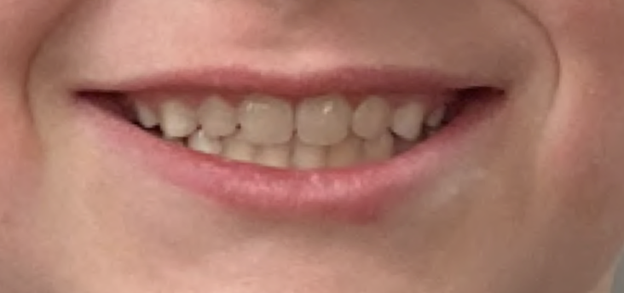
Crowded and overlapping teeth are evident in the photos above.

A beautiful smile is about more than just appearance—it plays a major role in your overall dental health. This patient’s journey is a perfect example of how orthodontic treatment can transform not only a smile but also improve daily oral hygiene and long-term health.

Patient. At just 9½ years old, this patient presented with significant crowding in both the upper and lower arches. As you can see in the “before” images above, many of the teeth were overlapping and rotated.

Problem. When teeth are crowded like this, it creates tight spaces that are difficult—sometimes impossible—to clean effectively. Even with good brushing habits, plaque and food particles tend to accumulate between overlapping teeth, increasing the risk of:

  • Cavities
  • Gum inflammation
  • Bad breath, and
  • Long-term periodontal issues

For this patient, keeping her teeth clean was frustrating and inefficient.

Solution. The solution for this patient was two-fold. We needed to address the crowding early with a palatal expander. And then align the teeth with braces.

Process. We began with Phase 1 treatment, using a palatal expander. This appliance gently widened the upper jaw, creating the space needed for permanent teeth to erupt more naturally. Early intervention at this stage is critical. By guiding jaw development, we can often:

  • Prevent more severe crowding later,
  • Reduce the need for extractions, and
  • Improve overall facial balance.

The palatial expander helps to widen the upper jaw, a treatment effective in young patients.

After creating sufficient space, we moved into Phase 2 treatment with braces. Braces allowed us to carefully guide each tooth into its ideal position, correcting alignment and bite issues. The teeth were gradually straightened, resulting in a balanced, functional, and esthetic smile.
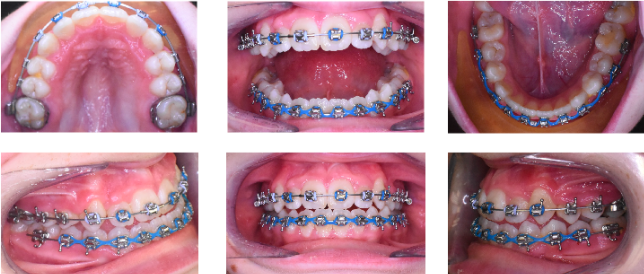
Braces help move the teeth, correcting alignment and bite.

Result. After treatment the patient’s teeth are healthier and easier to maintain. And the difference is more than just visual — it’s functional. With properly aligned teeth, brushing is more effective, flossing becomes easier and more consistent, plaque buildup is significantly reduced, and gum health improves

This patient quickly noticed how much easier it became to maintain her oral hygiene routine. It gave her a confidence boost. Beyond the health benefits, the emotional impact has been just as important. The patient is now much more confident in her smile, that shows in every photo.
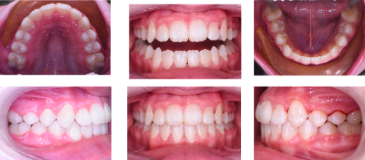
A straight, confident smile!

The Takeaway. It’s not unusual for a straight smile to lead to increased self-esteem, an eagerness to smile and engage socially, and a positive outlook on dental care in general.

Orthodontic treatment is an investment in both health and confidence. Addressing crowding early with tools like expanders, followed by braces, can make a lasting difference—not just in how teeth look, but in how they function every day.

If you’re wondering whether early orthodontic treatment could benefit your child, we’re here to help guide you through the process. Please give us a call.
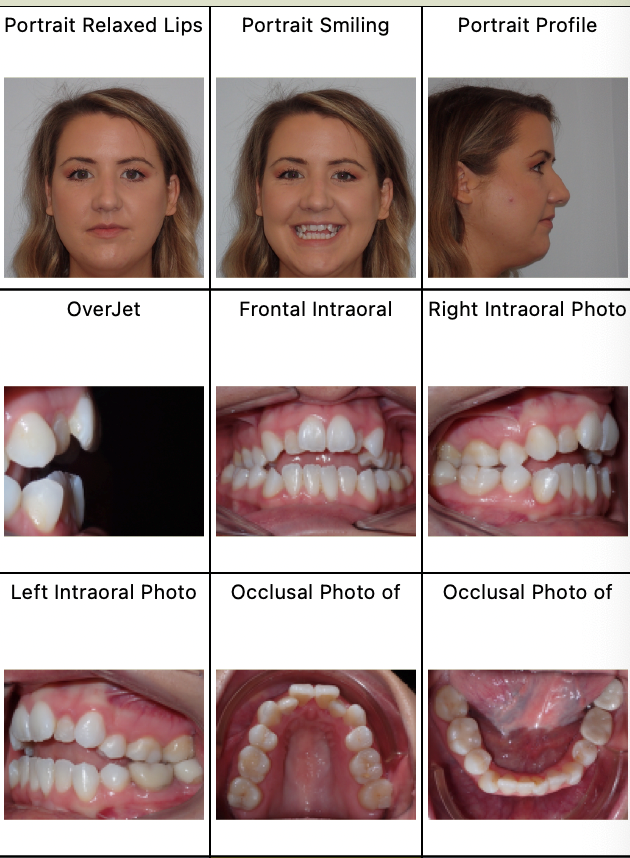
Case Study: Dental Problems Can Re-emerge In Adulthood

February 17th, 2026

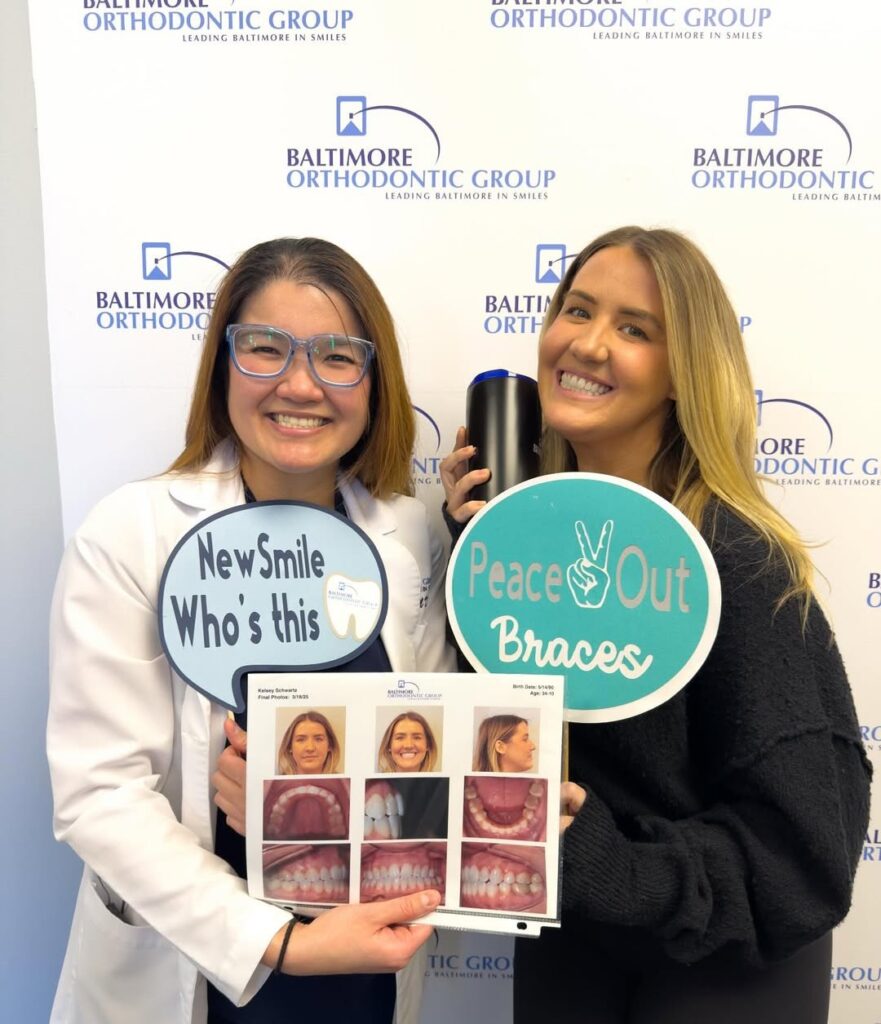
Kelsey and Dr Dao, after treatment completed.

Many people start orthodontic treatment as teenagers. Because of this, there is a misconception that after the teenage years, teeth will stay put. As with other areas of the body, teeth can change as a teenager grows into an adult and dental problems can re-emerge. This case study is an example of changes adults can notice as they mature. Hear more from Kelsey.

Patient. Kelsey came to Baltimore Orthodontic group in 2020 seeking treatment for her anterior open bite. She had previously received orthodontic treatment as a teenager, including premolar extractions and an expander.

Problem. As Kelsey grew to adulthood, the open bite and posterior crossbite re-emerged.  At this stage of adulthood, Kelsey was presented with two distinct options. 1) She could be treated with a course of Invisalign braces. This treatment would improve her teeth position but not perfect the bite. Or, 2) she could undergo full treatment with accompanying orthognathic surgery (corrective jaw surgery) to produce a "textbook perfect" smile. Kelsey chose the latter – with stellar results!

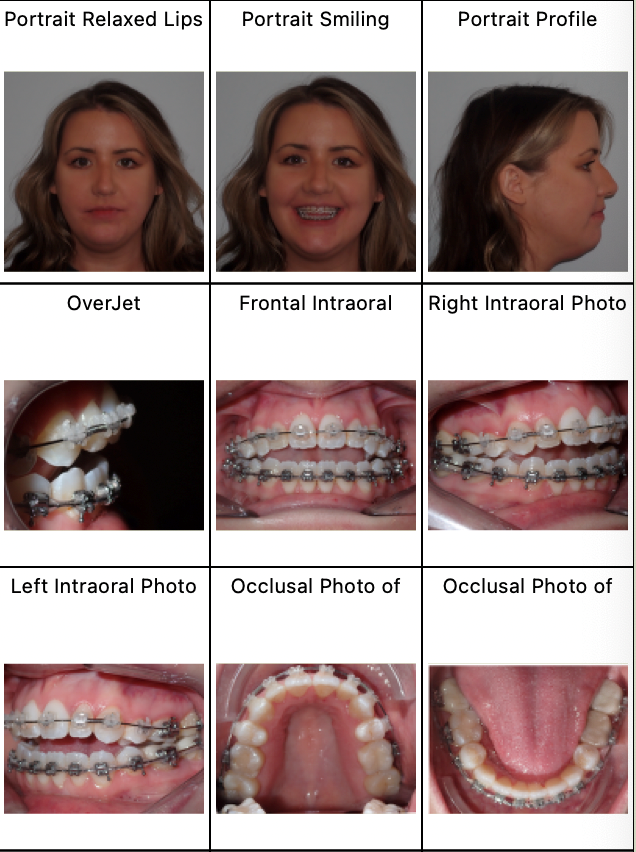
Kelsey’s teeth, demonstrating open bite and posterior crossbite.

Solution. Kelsey presented with generalized crowding, a posterior crossbite, and an anterior open bite that was partially the result of a forward tongue posture. Kelsey was prescribed myofunctional therapy, a form of physical therapy that addresses tongue habits, in order to help close the anterior open bite. The next step was to address tooth movement  with Invisalign. From there she transitioned to braces prior to the surgery to further encourage the movement of a few stubborn teeth.

Process. Orthognathic surgery was planned for several reasons. First, it was important that her upper and lower jaw were in harmony to address the posterior crossbite. Secondly, the surgery was crucial to closing the anterior open bite and providing the maximum stability to retain the position of the teeth.

Kelsey prior to orthognathic surgery. Notice how her teeth are straight, but the bite remains incorrect without surgical intervention!

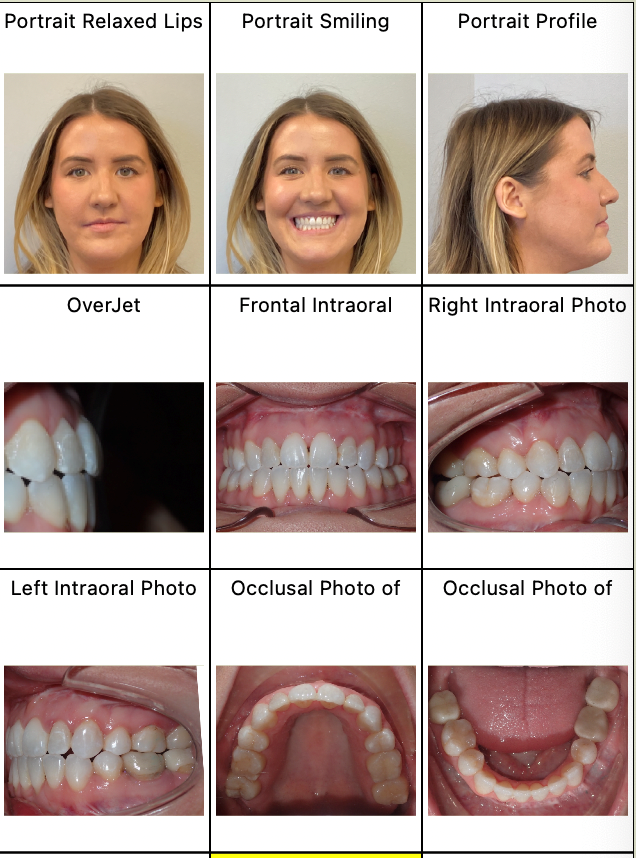
Result. Kelsey's treatment, while a big commitment, yielded similarly giant results! At the completion of orthodontic movement, her general dentist placed new molar crowns on the lower left side to complete an ideal bite. We were able to set up the adult teeth to make it easier to care for her teeth and gums long-term. Kelsey's case is a wonderful example of how multidisciplinary care between different types of dentists – general dentists, orthodontists, periodontists, and oral surgeons – can contribute to ideal dental esthetics and health. We are so happy for her!

Kelsey, finished treatment and with a beautiful smile!

Case Study: Lauren Learns About Exposures

September 29th, 2025

Creating space for teeth that have not yet erupted is sometimes necessary during orthodontic treatment.

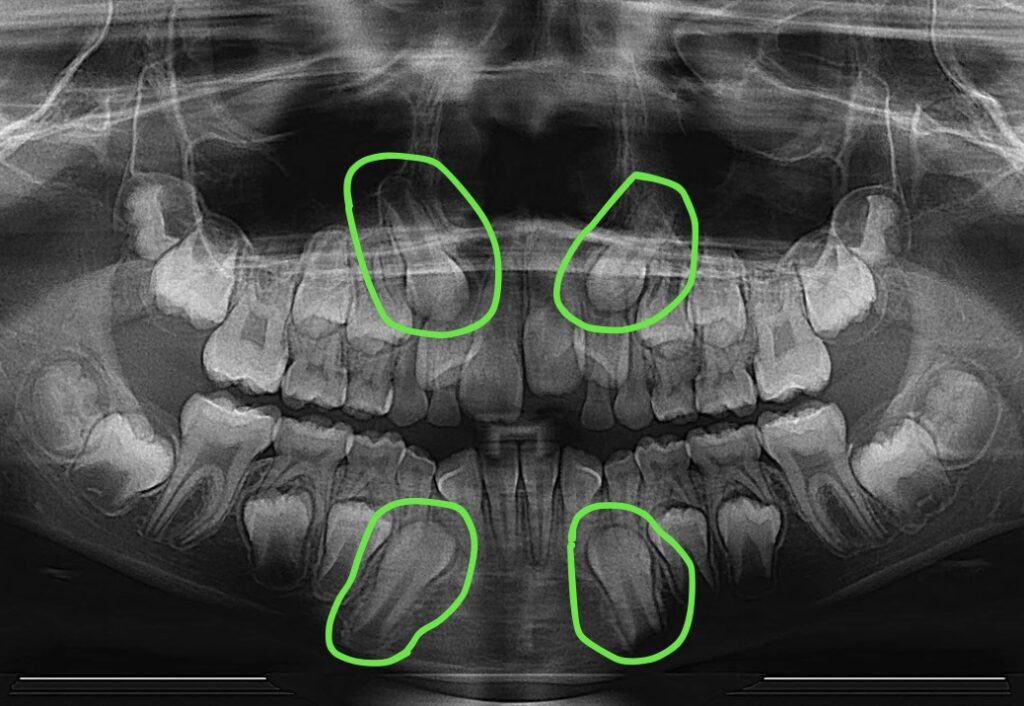
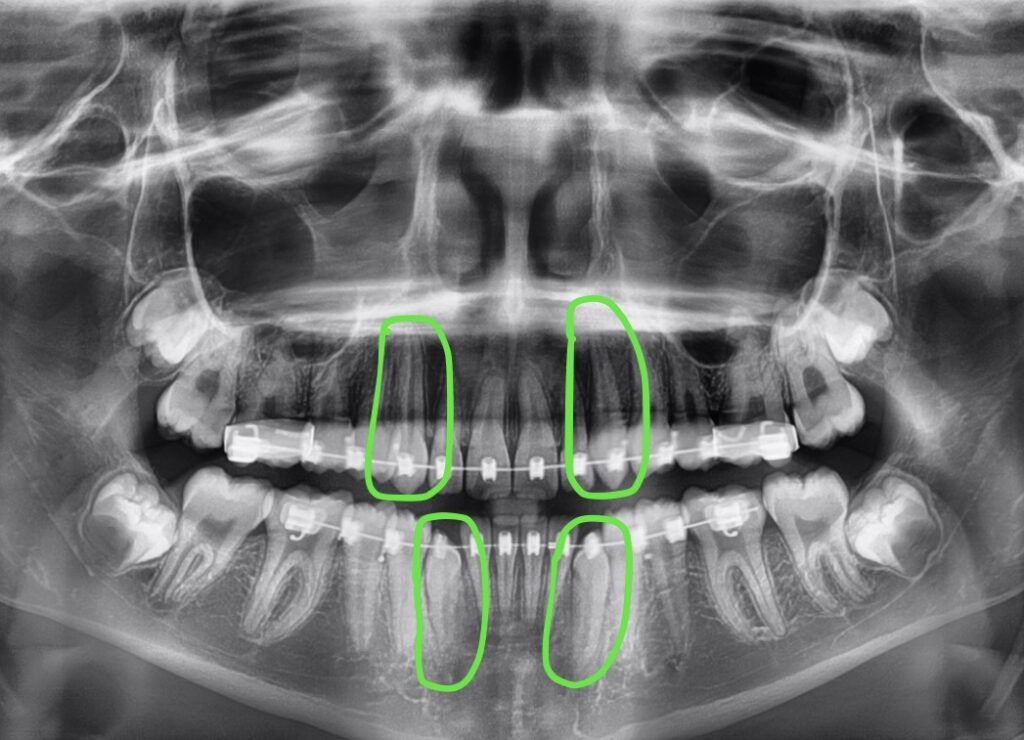
Patient. Lauren came to us a few years ago with the primary concern of "crowding."  Upon taking an x-ray, we noticed all four of her canine teeth – which had not yet erupted – were positioned in such a way that they would likely harm her adjacent adult teeth. That’s not what we want! Thanks to the x-ray shown below, we knew that we needed to prepare Lauren’s mouth for the eventual eruption of those teeth!

The position of Lauren's canine teeth before eruption.

Problem. We needed to create space for the unerupted canine teeth. In the process of making those spaces available, Lauren visits regularly and we watch the progress of her canine teeth. Making the space for these teeth doesn’t always guarantee the teeth will come into the perfect position.

Solution. In Lauren’s case, in order to further bring the teeth into the best "spot," help was needed!  We referred Lauren to an oral surgeon or periodontist who performs an "exposure" procedure. 

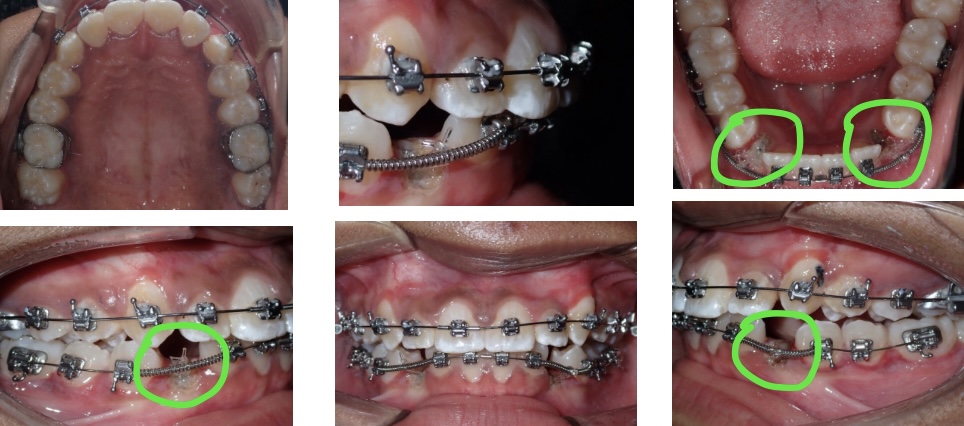
The Process. During this procedure, Lauren’s mouth was numbed. The periodontist or oral surgeon makes his/her way through the gum tissue and bone and glues a small button on the tooth. The button is then attached to a short gold chain. Back at the orthodontist office, we attach this chain to the wire of Lauren’s braces. Over a series of visits, we slowly pull the teeth closer and closer until we can finally see them poke through the gum tissue! Take a look at the highlighted areas  below to see the areas where we slowly encouraged Lauren’s teeth to the correct positions.

Progress photos showing gradual positioning of Lauren's canine teeth.

Results. Once the canine teeth have fully erupted, we place full braces on the teeth until they are straightened and in line with the rest of her teeth. The x-ray below shows the canine teeth, now in the corrected positions.

Lauren's canine teeth, fully erupted and in the correct positions.

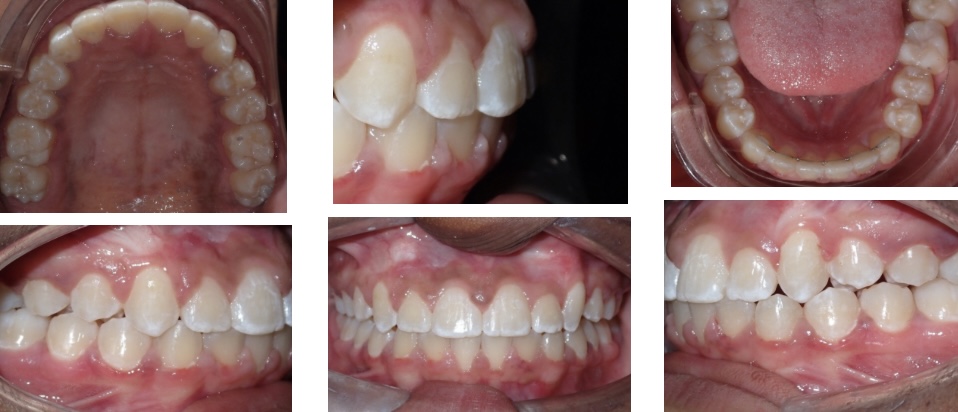
Finally, Lauren had all the braces removed. What a beautiful full smile and a happy patient! Lauren started treatment at age 11. Her treatment lasted two and a half years, allowing time for the canine teeth to move properly and slowly through her bone.

Lauren's teeth following treatment.

Case Study: A Surprise For Jenn

June 28th, 2025

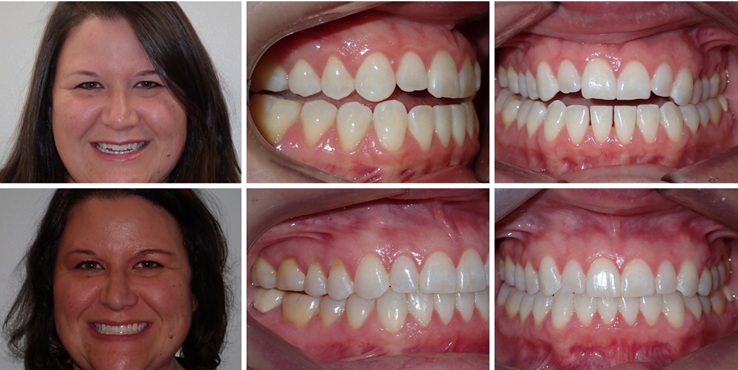
Jenn’s photos, before and after treatment.

An adult patient, Jenn, came to Baltimore Orthodontic Group with an open bite, causing only her back teeth to touch.

Patient. Jenn came to Baltimore Orthodontic Group with an open bite that not only caused eating problems but also affected her appearance.

Problem. When Jenn came to Baltimore Orthodontic Group she was fully prepared for major jaw surgery as part of her course of treatment. Her bite was severe enough that only her back teeth would touch when she closed her mouth. This resulted in challenges with chewing and biting. Additionally, she felt self-conscious about her appearance. This was especially so because Jenn’s profession meant she was constantly speaking in front of groups. Her open bit was noticeable to all. When Jenn came to BOG she expressed nervousness about the treatment and especially about the prospect of having surgery.

Process. Jenn was both committed and confident throughout the process. She worked with Dr. Kyser and his team. The goal at the start of her treatment was to prepare for major jaw surgery. However, very early in her treatment, Dr. Kyser indicated that he believed he might be able to obtain optimal results without surgery, if Jenn was willing to work with the team for a little longer than expected.

Solution. Jenn was both surprised and thrilled with the idea of avoiding surgery, even if it meant spending more time in treatment! During the process, there were times when she thought the results she was getting were good enough and treatment could stop. But Dr. Kyser and his team encouraged her to stick with it because he felt that optimal results could be obtained. She recognized his support and dedication and remained committed to her treatment every step of the way.

Results. The result of Jenn’s treatment was a perfect smile and healthy mouth. According to Jenn, “My teeth have never looked so good, and my jaw has never felt better. I didn’t realize how bad things had gotten until I completed the process.”

Jenn could not be more grateful for the skill, care and expertise of Dr. Kyser and his team. She told us, “My recommendation and referral could not come highly enough. I would encourage anyone who is considering orthodontics to reach out to Dr. Kyser and his team.”

Jenn admits that as an adult going through the orthodontic process, it’s a bit different from the process a child might experience. In some ways, it was more difficult for her to make the decision. She appreciates that her team of caring professionals understood how she felt and went out of their way to assure Jenn that she was supported during each step of the treatment.

Case Study: Invisalign First

May 7th, 2025

Patient. Jack came to see us as an awesome 8-year-old. His parents had a few concerns with his teeth. They were all looking for help . . . and answers!

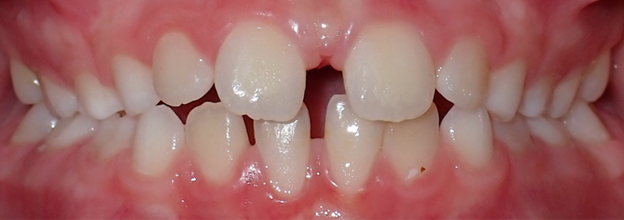
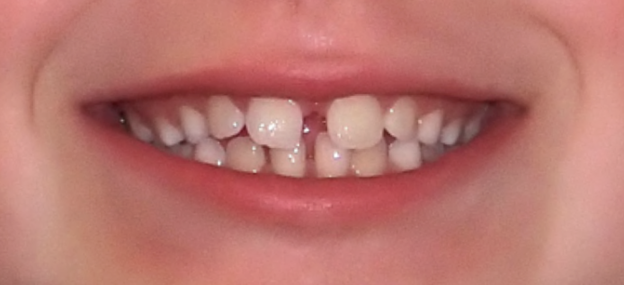
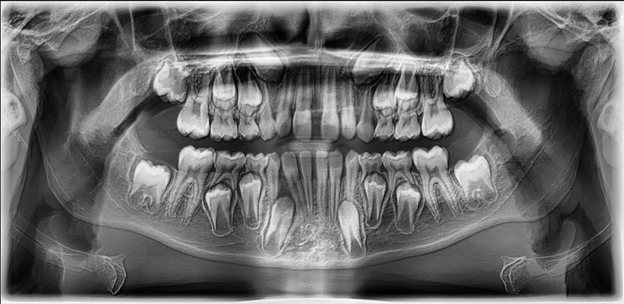
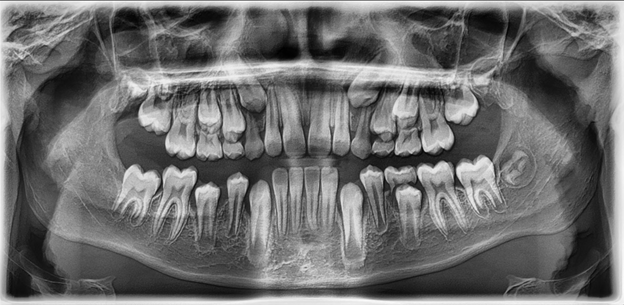
Problem. Jack is an active elementary school child. He and his parents came to us with concerns of spacing between his front teeth. Though at the age of 8, some space between the front teeth is perfectly normal, in Jack’s case it was excessive. Panoramic x-rays revealed other concerns. Jack’s adult canines were high and on the verge of being blocked out!

Jack's photos and xray before treatment, showing the spacing of his front teeth upper canines.

Solution. Jack would benefit from Phase One orthodontic treatment. Because of his active lifestyle, Jack and his parents were hopeful for a minimally invasive treatment option! They came to the right place. As one of the leading Invisalign providers in the nation, Baltimore Orthodontic Group is on the forefront of technology - offering Invisalign First treatment!*  Invisalign First is similar to Invisalign for adults – though it is specifically tailored to children between 7 to 11 years of age. 

The benefits of Invisalign First are twofold. The process allows for excellent dental arch development and expansion which aids in the eruption of adult teeth while also helping in the alignment of front teeth. The goals of Phase One (or early interceptive treatment) is different for every patient but the overarching theme is to allow for ideal eruption of adult teeth. In Jack’s case, our goals were to close space between the front teeth, as well as to produce a slight expansion of the upper and lower dental arches to help Jack’s permanent canines erupt in a better position. This treatment option also allows us to address the chief concern for Jack and his parents – the spacing between his front teeth! With Invisalign First, patients are seeing us less often (an average of once every 3 months) and experiencing fewer emergencies than traditional methods. And doctors really like the Invisalign First option as it is easier for the patient to brush and floss teeth.

Process. After deciding that Invisalign First was the ideal treatment option for Jack, the doctors at Baltimore Orthodontics Group got to work. We use the software technology available through Invisalign to set up the treatment process for Jack. When Jack came in for his first, easy-start appointment he quickly mastered the techniques for placing and removing the Invisalign trays. After some instructions, he was on his way to his next activities without missing a beat.

Jack's photos and xray after Invisalign First.

Results. Jack was treated with 25 Invisalign First aligners and in just over 6 months, Jack was done with active treatment and moved on to retention!  Spaces closed, expansion was achieved, and room for the adult teeth was created!  Jack’s case was a success and Jack and his parents were very happy with the results and the process!

*Note for Phase One Treatment. Age seven to eight is the appropriate time for an initial orthodontic evaluation. Around this time frame, early signs of crowding and malocclusion can be identified. It is also often the easiest and most effective age to address the issues. Some children will not need a first phase of treatment. And likewise, not all children should be treated with Invisalign First. There are still certain situations and bites that are best treated with traditional appliances. Schedule a complimentary consultation with the doctors at Baltimore Group to see if Phase One treatment is needed and if Invisalign First of the best option for your family!

Case Study: Appliances Today Are No Longer Medieval!

February 24th, 2025

When it comes to correcting the alignment of teeth, the thought of an expander or some kind of headgear device sometimes conjures up images of medieval torture – or at the very least, a bulky, uncomfortable device. With the right experience and today’s technology, that process is much more reasonable, and comfortable. One of our younger patients illustrates this new technology quite well.

Patient. An 8-year-old came to us via a recommendation from his dentist. He had a complete crossbite – which means that all of his upper teeth were inside his lower teeth.

Problem. Such a complete crossbite can negatively affect the growth of a child’s jaw. For that reason, it’s important to correct crossbites at an early age. When a patient with a crossbite comes to us, it’s important for us to make room in his/her mouth.

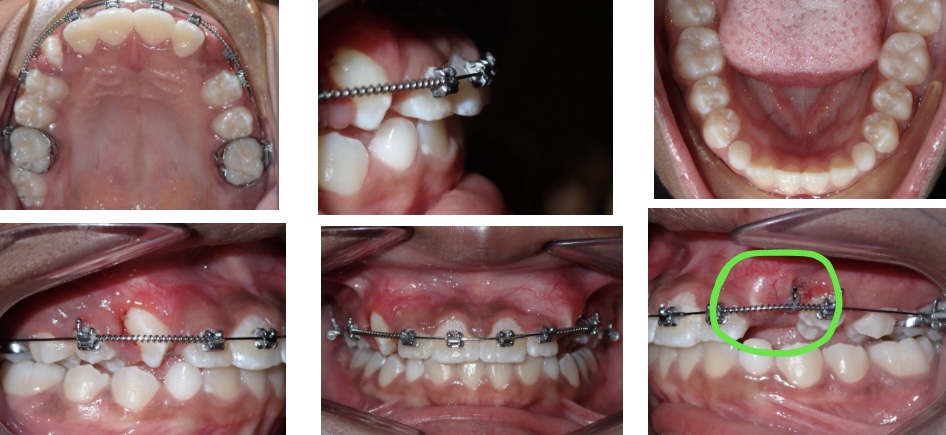
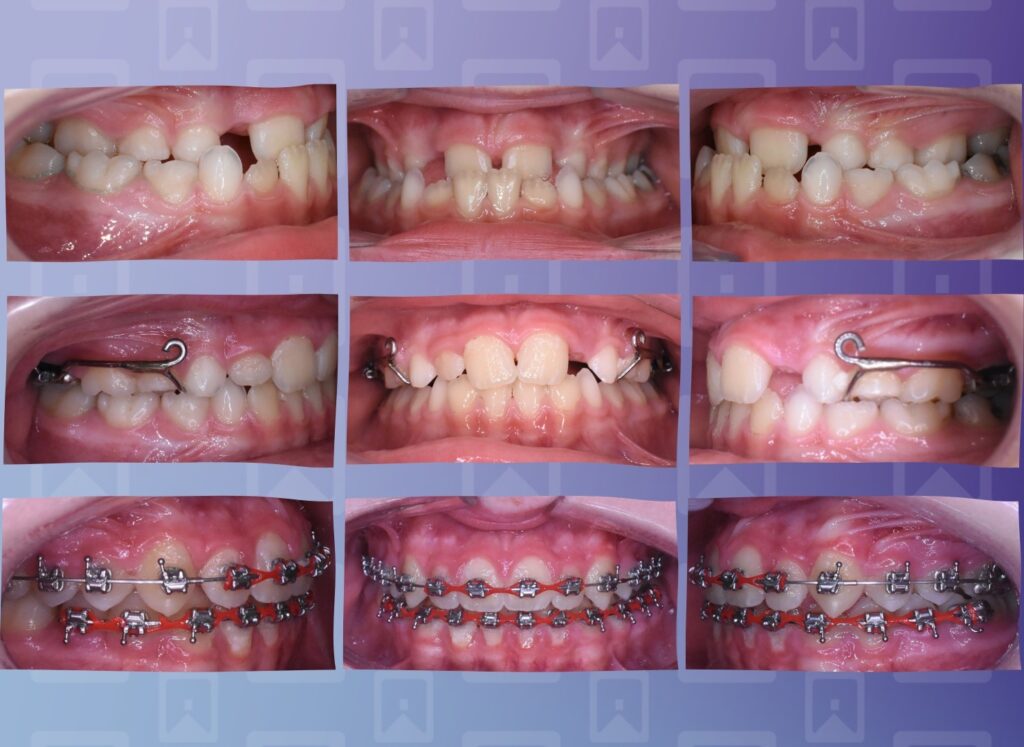
Solution. When the doctors at Baltimore Orthodontic Group first saw this 8-year-old, we recognized that our first course of action was to make ROOM for growth! While you can see by the string of photos below that the need for room was fairly drastic, we were able to start working on this patient using ONE simple appliance to correct his crossbite while bringing his upper teeth forward.

This photo shows the process of straightening the teeth of this 8-year-old. The first line of photos show the complete overbite. The second row includes the device inserted to make room in his mouth. Finally, once all the teeth had grown in, the third row includes the braces used to straighten his teeth.

The Process. With time, the appliance used for this patient allowed space for his adult teeth to come in.Once all of the adult teeth erupted in this patient’s mouth, we then placed him in braces to straighten and align his smile.

Results. Before too long, and without enduring crazy mechanical contraptions, this patent had no more crossbite and we were able to remove his braces. Even better, we caught the problem early – the patient isn't even in high school yet!

Case Study: Surgery Is Sometimes Required To Align Adult Teeth

January 22nd, 2025

Jacob, post treatment, with Dr. Dao, sporting a perfect smile for the holidays!

Timing is often the reason for a visit to the orthodontist. In this case, Jacob was planning for the future, hoping for positive results before his wedding.

Patient. Jacob was referred to Baltimore Orthodontic Group by his general dentist, who had noted a clinical asymmetry in his lower jaw.

Problem. Jacob presented with a posterior crossbite on his right side, and an open bite at the front of his smile. Crowding was noted on both the top and bottom arches, and the upper and lower midlines were not aligned due to the pre-existing asymmetry. Jacob shared with our doctors his goals of achieving ideal symmetry and esthetics, with the hopes of seeing noticeable improvements before his wedding in the spring of 2024. 

Jacob’s photos before treatment.

Solution. Posterior crossbites are best addressed in young children, as they do not self-correct with time and in actuality become harder to treat with age. Once we grow past an "ideal age window", crossbites become more stubborn as our bones begin to mature and sutures begin to fuse. Posterior crossbites in adults often cannot be treated with an expander alone. Instead, surgical intervention is often needed in order to achieve true correction, protect the integrity of the hard and soft tissues, and maximize stability in retention. In Jacob's case, surgery would have the additional benefits of correcting the asymmetry in his lower jaw to perfectly align his bite, while simultaneously ensuring contact on the anterior teeth to facilitate daily speech and mastication. After reviewing the benefits of this approach, Jacob was committed and ready to get started!

Jacob’s photos after treatment. Note his wider smile and change in jawline.

Process. The decision was made to begin Jacob's case with a palatal expander in conjunction with surgery. The palatal expander would create additional transverse room to either side of the jaw to address the malocclusion and assist the surgeon in the procedure to correct the crossbite. The expander was delivered shortly after the new year of 2022, immediately preceding the surgery, and retained for approximately six months. Subsequently, Jacob's teeth were straightened with Invisalign before a second procedure to perfect the symmetry of his arches.

Result. Typically, surgical cases are carried out with traditional braces to assist in stabilization and healing. However, the doctors at Baltimore Orthodontic Group were able to achieve ideal results utilizing Invisalign following Jacob's request. Jacob was even able to take a short break from his Invisalign attachments and trays to get married, before picking up treatment again seamlessly!

Finishing touches were placed with additional aligners before the conclusion of treatment in December of 2024 - just in time for the holiday season! Treatment spanned less than three years and yielded some fantastic results in the occlusion and profile, thanks to Jacob's commitment and dedication throughout the process. At the end of treatment, Jacob was prescribed retainers to wear at night to preserve the positive improvements in his smile. What an amazing difference!

Let'sGet Started

The first step towards a beautiful and healthy smile is to schedule an appointment with Baltimore Orthodontic Group with a dedicated team that treats patients of all ages. We work with our patients to find a treatment option that best fits the patients’ needs, including: Invisalign, clear braces and metal braces. We have five convenient orthodontic offices in the Baltimore area. You can schedule your appointment by giving us a call at your preferred location, Ellicott City, Catonsville, Eldersburg, Eastpoint or Lutherville. Contact information is listed below. You can also send a request by email to us by clicking here.
We look forward to meeting you in our office!

Request Appointment