
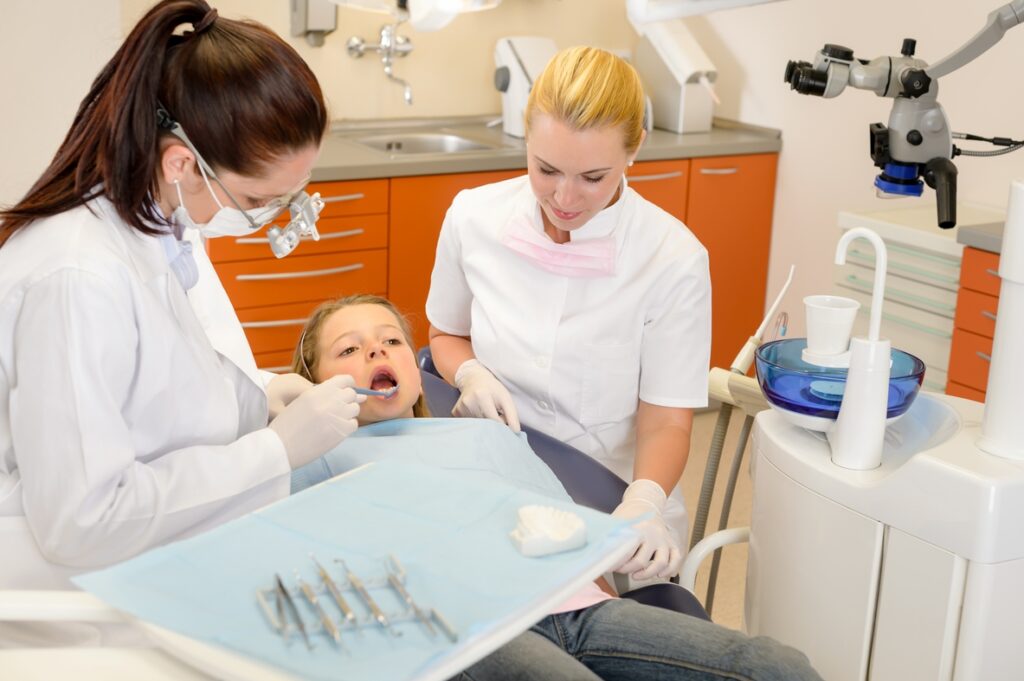
Can a parent, unschooled in dentistry, know when their child needs braces? In some cases of protruding or overlapping teeth a parent may have a good idea that braces will be part of their child’s future. But sometimes it’s not so obvious. Sometimes it’s just strange habits that are the telltale sign of future bracing needs. In truth, your child’s dentist might be the best person to consult. Parents should think of the dentist as the quarterback for your child’s dental needs. If unsure whether braces are necessary, just ask! In most cases, you can also consult with an orthodontist. When a child reaches the age of 7, consulting with an orthodontist is the perfect time to assess future needs. It’s also the time when future treatment can be planned so that your child gets the attention he or she needs in time, and in the manner most receptive to improving the structure of the teeth and the child’s smile!
What are the signs that your child may need braces? Parents may notice crowded, crooked, or protruding teeth, gaps, or difficulties with chewing. These are sure signs that your child should at least visit a dentist or orthodontist to hear more. Other indicators of teeth that may need braces include early/late loss of baby teeth, jaws that click or shift, mouth breathing, or persistent thumb sucking after age 3. Are you worried that your child may be too young? Don’t be. The American Association of Orthodontists recommends an initial evaluation by age 7. At this time, a plan of action can be designed for best results.
Here are some of the signs to look for.
- Visible Misalignment. In other words, crowded, overlapping, or crooked teeth.
- Bite Issues. Protruding teeth, underbite, or crossbite (where upper teeth fit inside lower teeth) can cause problems when biting into food.
- Jaw Problems. If you can hear jaws that click, pop, or shift when your child opens or closes his or her mouth, be sure to visit your dentist or consult with an orthodontist.
- Do you notice certain habits or functions in your child? Look for things like consistent mouth breathing, thumb sucking, or difficulty chewing/biting. You might also see your child biting his or her cheek.
- Sometimes we get signals from developmental Issues. For instance, did your child experience early or late loss of baby teeth? Typically, losing baby teeth may start around age 6 and finish by age 12.
When should you see an orthodontist?
Certainly, it’s wise to visit an orthodontist if your dentist suggests that an examination might be valuable. While early check-ups of children, by age 7, are recommended to monitor growth, actual treatment often begins between the ages 9 and 14. When treatment begins may depend on when permanent teeth come in. But even if permanent teeth have not yet appeared, it pays to visit with an orthodontist.
What does the treatment look like for a child? Typically, when a child begins treatment with an orthodontist, a two-phase approach is often recommended.
Early phase treatment is usually for children between the ages of 7-10. This treatment addresses urgent jaw growth and spacing issues, even as baby teeth are still present.
Phase 2 treatment usually begins with full braces, somewhere between the ages of 10-14. By then most permanent teeth have erupted and the jaw is still growing and malleable.
Talking with your orthodontist. In most cases, an orthodontist will offer a free initial consultation. This is a great way to start treatment as it helps to establish a baseline for a child’s dental development. There are many different types of braces available now. Technology has certainly played a large factor in how an orthodontist may treat your child. Setting up a consultation and speaking freely with your orthodontist can help everyone understand the processes going forward. At Baltimore Orthodontic Group we create healthy, beautiful smiles for people of all ages. At the same time, we get to know you and your child. An important part of our work is building wonderful, lasting friendships with all of our patients!
 Website Powered by Sesame 24-7™